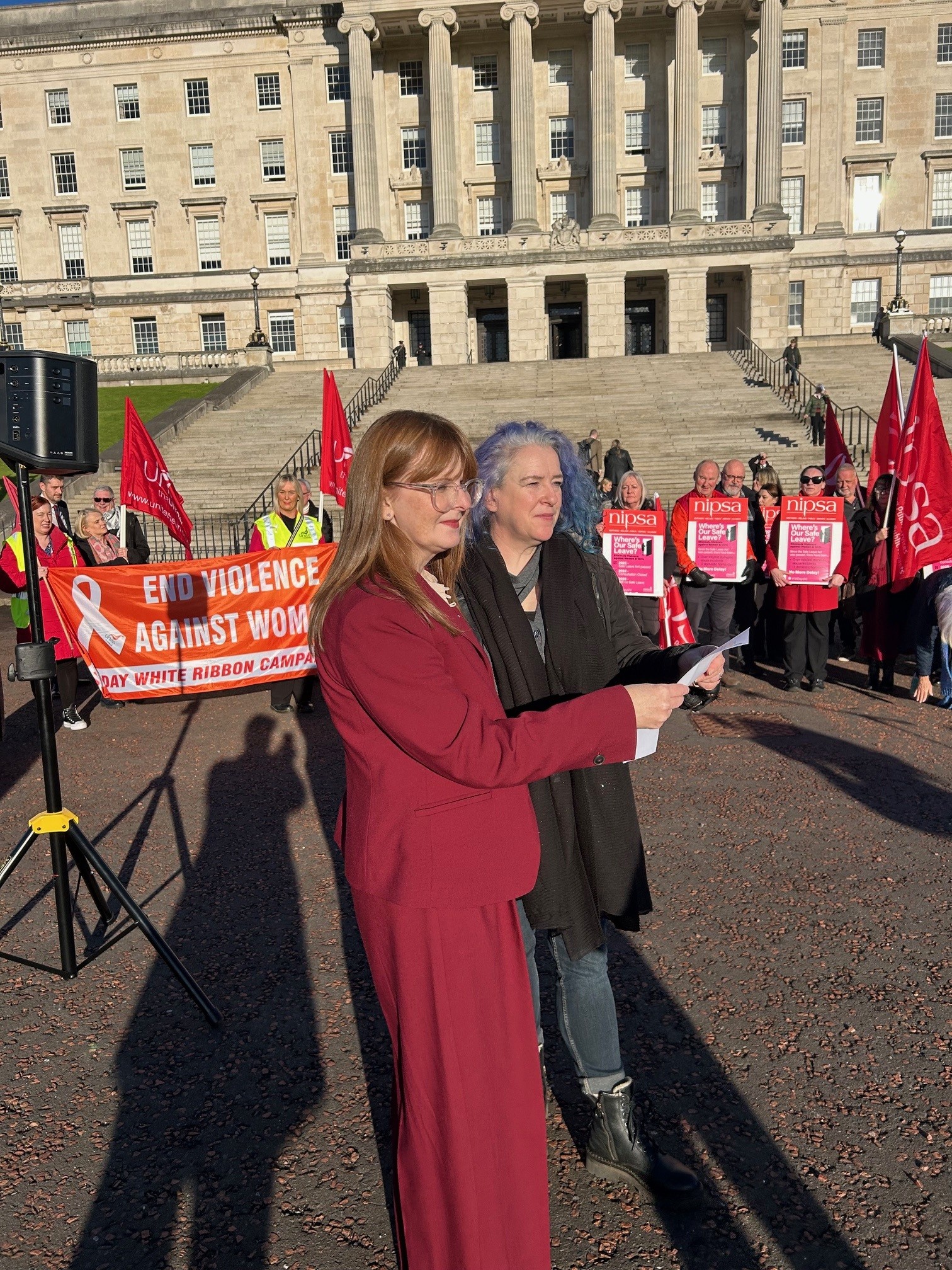

On 25 November, trade unions supported by civil society marked the International Day for the Elimination of Violence against Women and Girls by asking:
‘Where’s our safe leave?’ and raising concerns about the long delay in providing paid leave for workers dealing with domestic abuse.
Trade unions hosted a rally at Stormont and invited the Minister for the Economy, Dr Caoimhe Archibald to receive a letter on behalf of the trade union movement from the Chair of the Northern Ireland Committee ICTU (Jacquie White) and the Chair of the NIC ICTU Women’s Committee (Tina Creaney).
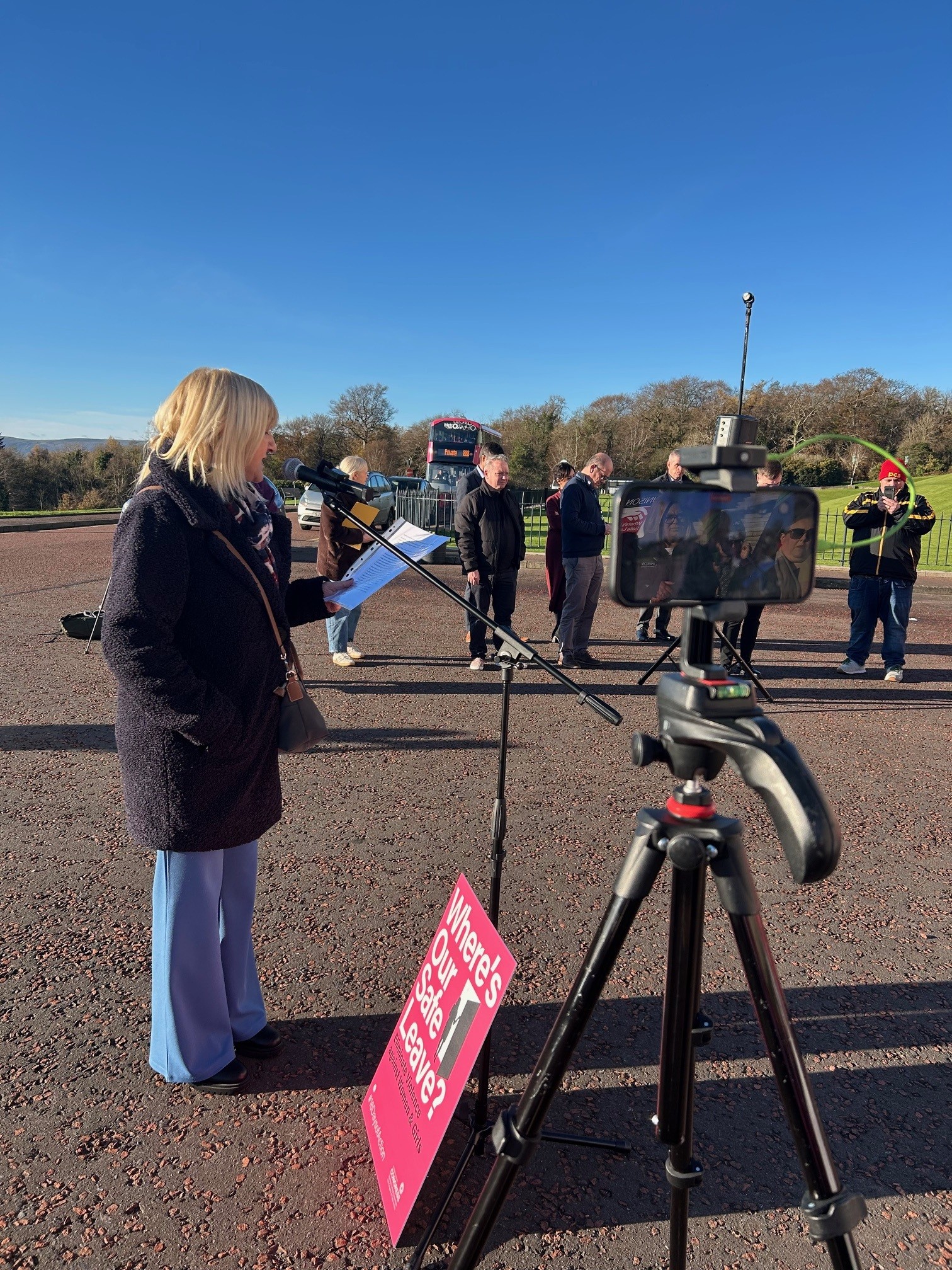
ICTU Equality Officer Clare Moore said
The ability to take paid safe leave from work will make it easier for victims of domestic abuse to continue working and maintain vital economic independence. The safe leave act will also inform employers about the impact of domestic abuse on the workplace as well as encourage employers to work with unions to implement policies and better support those affected by domestic abuse.
The Assembly passed the Domestic Abuse (Safe Leave) Act back in 2022 creating a right to 10 days paid leave each year that can be used to deal with issues arising from domestic abuse. But three and a half years later, the new law has still not been brought into effect. The Department of the Economy was tasked with drawing up regulations but despite a public consultation on the rules that closed over a year ago, the right to safe leave is still not available.
Hailed by domestic violence campaigners as ‘a lifeline for survivors’, safe leave provides victims with time to take the practical steps involved in keeping themselves and their families safe, such as arranging refuge or alternative housing or attending court hearings. The PSNI deal with around 30,000 domestic abuse incidents each year and have recorded 17 homicides with a domestic abuse motivation since the Safe Leave Act was passed in 2022.
Trade unions welcomed the participation of the Economy Minister Caoimhe Archibald who told participants
Domestic abuse can have a devastating impact on victims and survivors. It can affect anyone in our society. It is crucial that we work collectively to create a society where violent behaviours are not tolerated and everyone can be safe and free from fear.
I firmly believe that workplaces are an important component in achieving this aim. Work can provide a safe space for those who are suffering from domestic abuse. Work can also help workers maintain their financial independence. I remain committed to the introduction of a new statutory right to paid safe leave before the end of the Assembly mandate. I hope this new right will make it easier for victims and survivors to access vital support. I will continue to work with trade unions, employer representatives and support organisations to ensure we implement this new legislation in a way that will support those who need to use it.