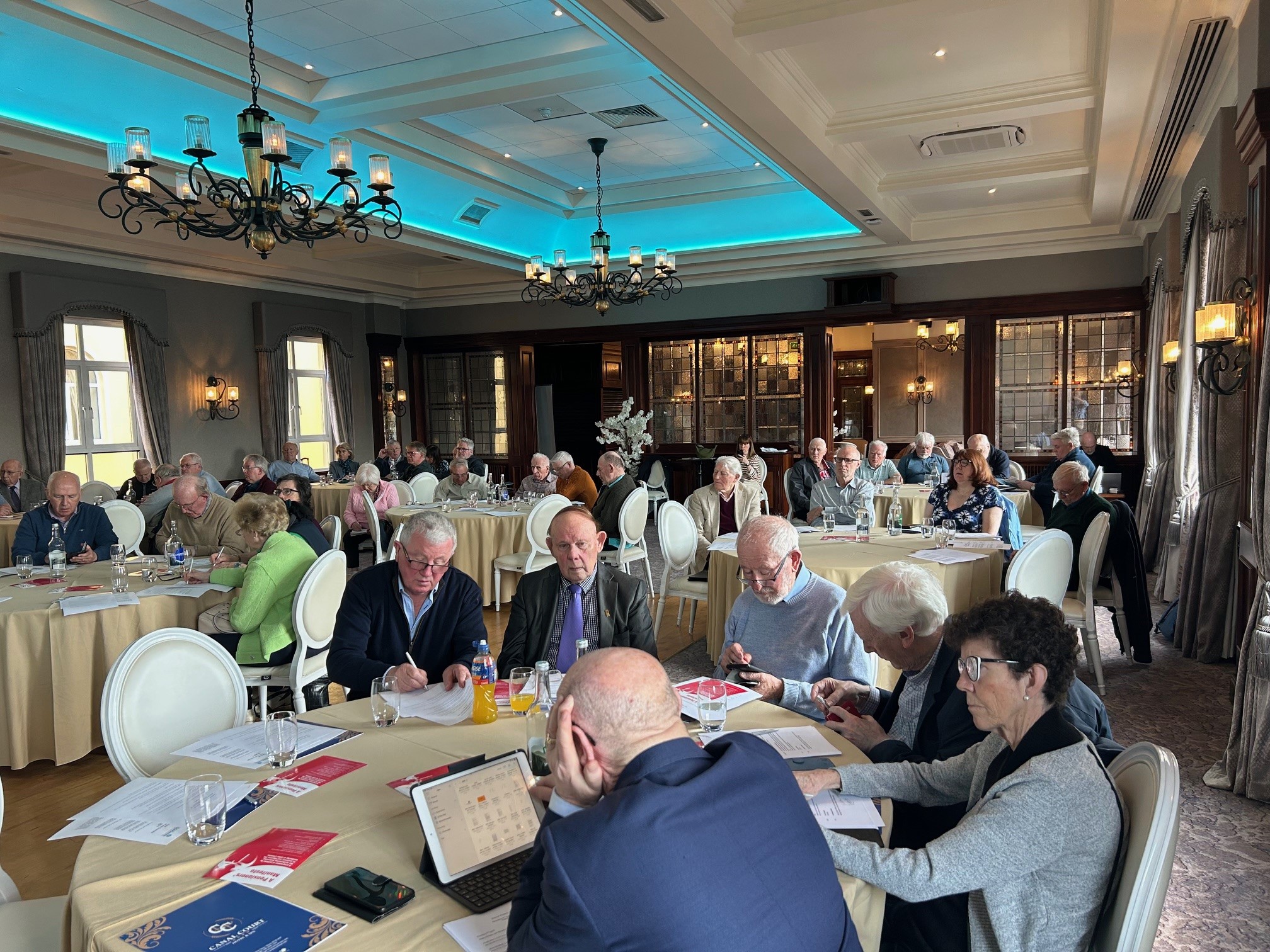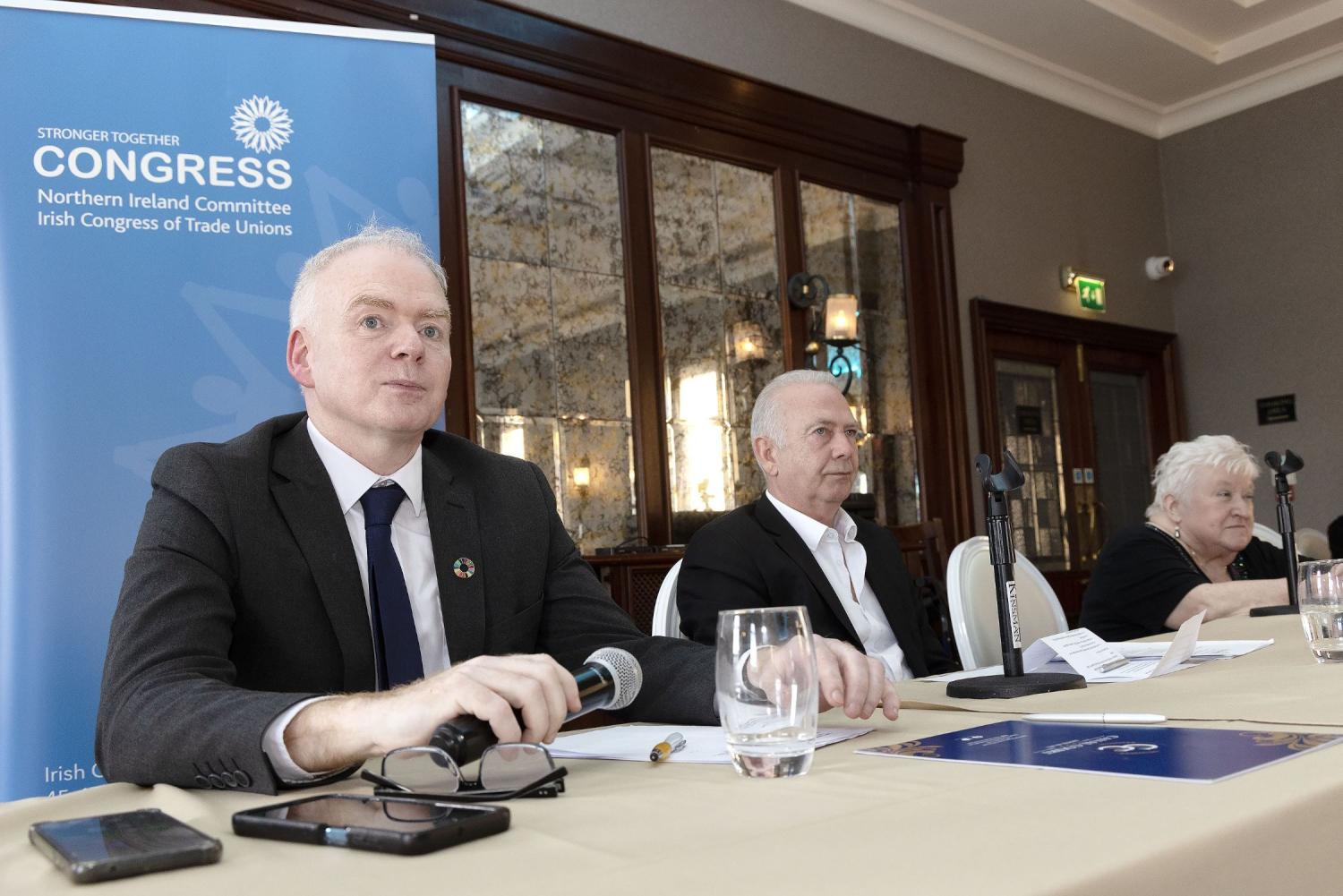
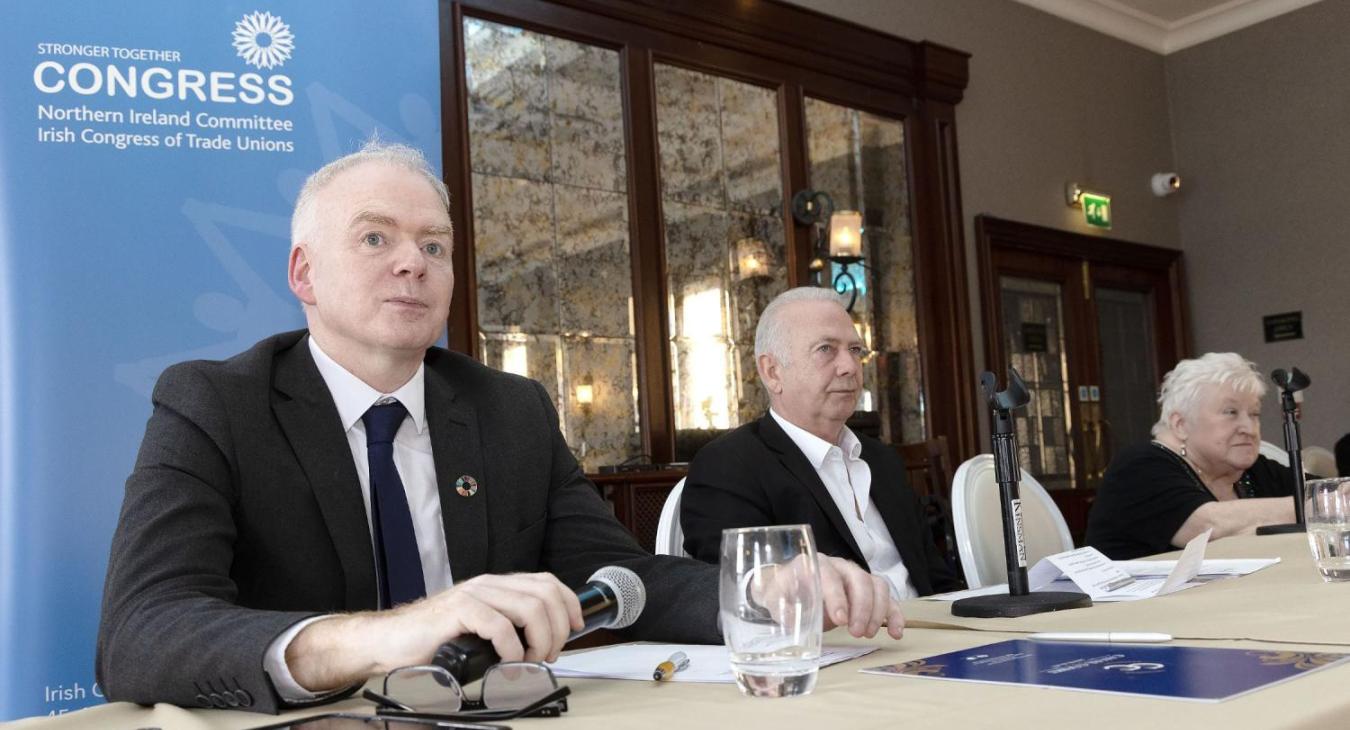
The NIC-ICTU’s Retired Workers’ Committee (RWC) annual Age Seminar was held in in joint session with the RoI RWC in the Canal Court Hotel in Newry.
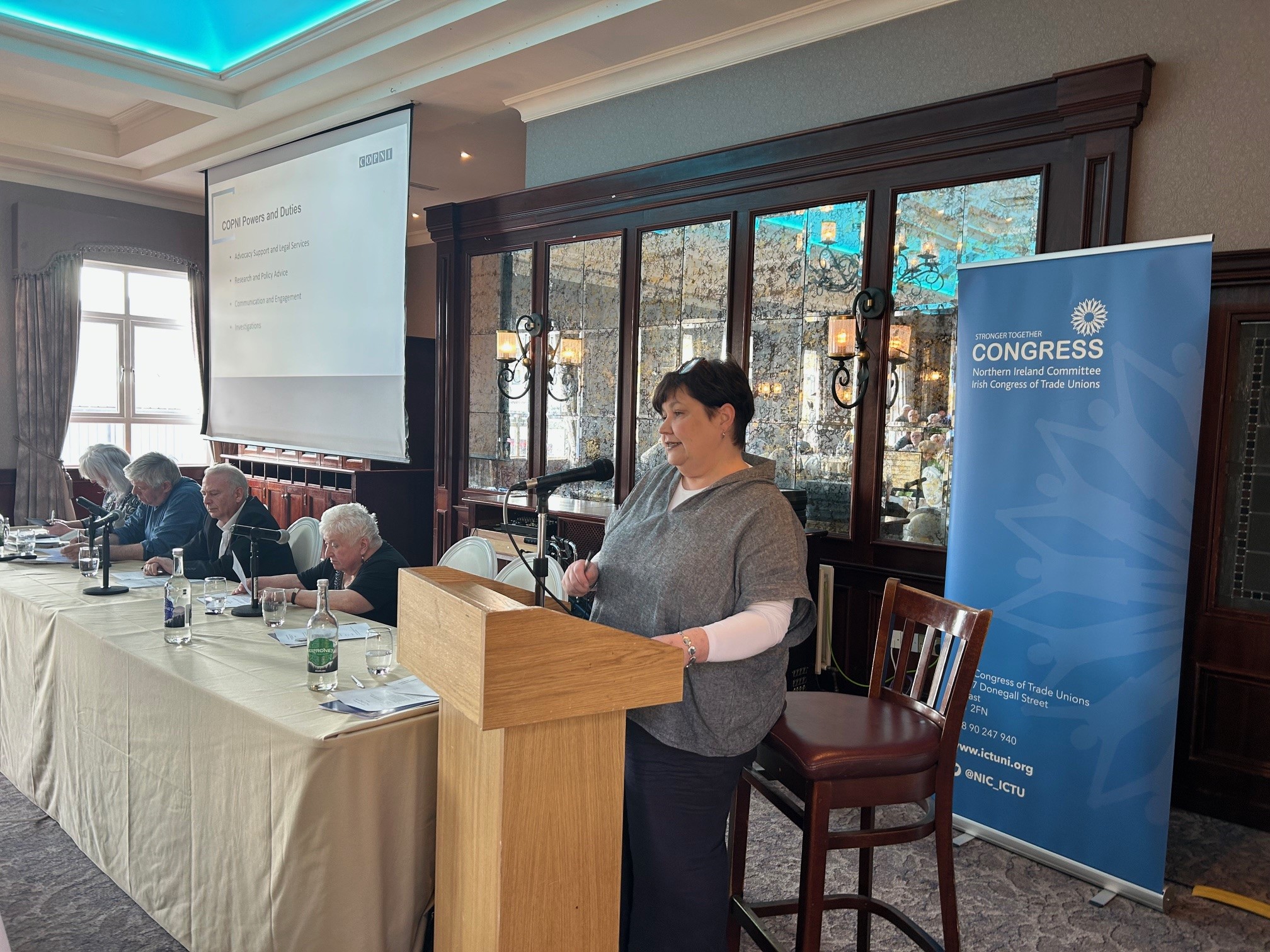
The first speaker was Evelyn Hoy, CEO at the Commission for Older People, who described its Powers and Duties, on respecting residents’ rights in care homes report, the new Are You Ageist? report, a recent presentation at the Retired Teachers Association of Ireland Convention, about the wider Campaign for a Commissioner for Older People for Ireland.
Older citizens in the Republic face difficulty making ends meet on the state pension, trying to access public services, banking or utilities without constantly being forced to go online, and have growing anxieties around housing, healthcare, and transport. A Commissioner for Older People was a key ask for Age Action in the most recent general election and the Alliance of Age Sector NGOs are strong and vocal on this issue, as are trade unions.
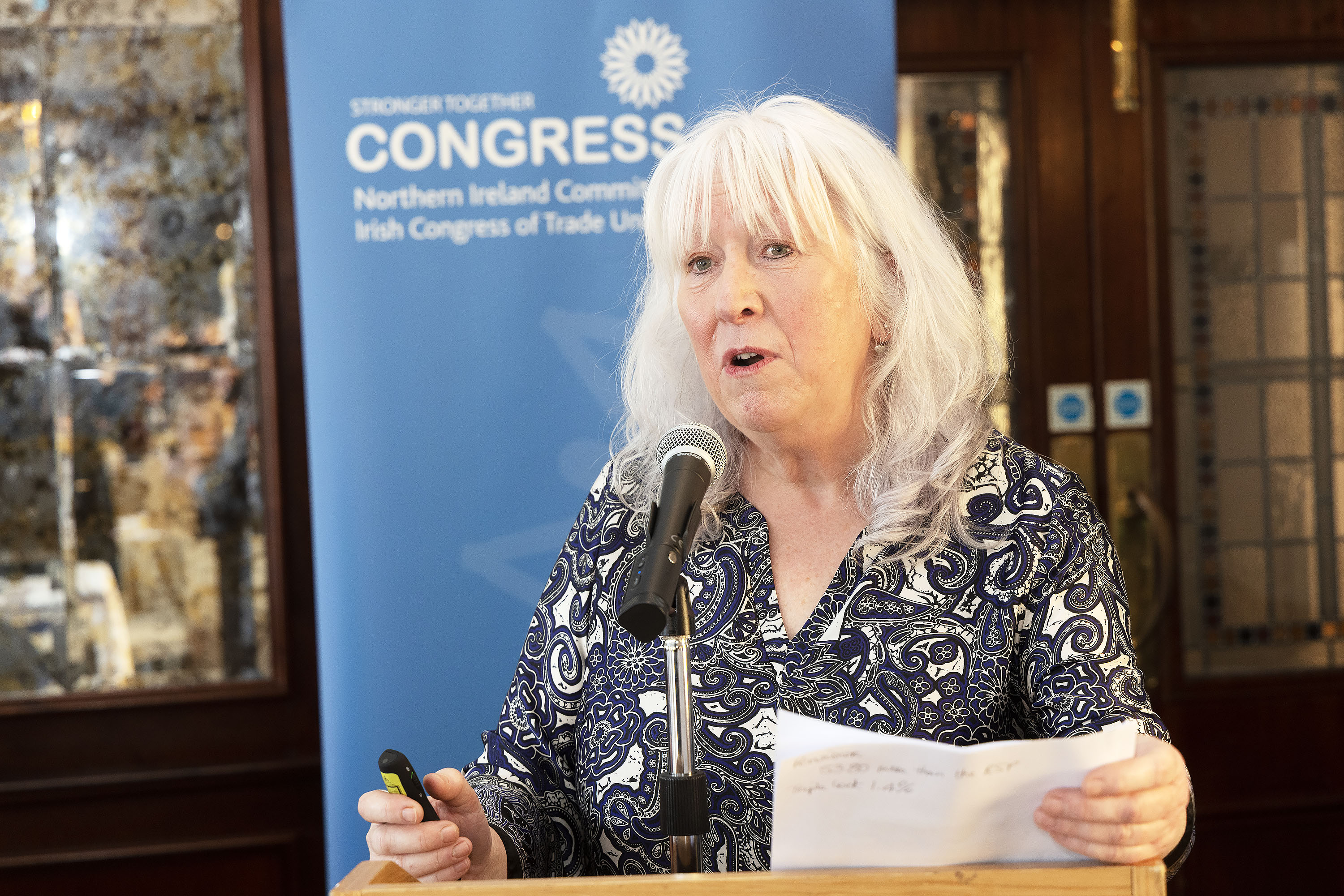
The RWC has a strong relationship is the UK-based National Pensioners’ Convention, and of course many members of the RWC are also members of the (NI) Region of the NPC. It’s chair Jan Shortt participated in the Seminar, outlining the NPC’s recent campaign and lobbying in Westminster. It’s major campaigns right now are:
- Restoration of the winter fuel payment to all pensioners
- Rights of Older People
- Pensioner Poverty
- A Commissioner for Older People in England and Scotland
This was followed by a session led by two retired members from Unite, on that affiliate’s campaigning on the means-testing of the Winter Fuel Payment, which has involved lobbing MLAs and Stormont ministers, a rally at Parliament Buildings and at the NI Dept for Communities, highlighting the absence of an Equality Impact Assessment by the devolved administration. This is the basis for a Judicial Review being brought by Unite which will be decided soon at Belfast High Court.
Unite’s Dympna McGlade complimented the presentation from Brian Heading with a broader presentation on campaigning on policy matters as well as individual cases for members. Dympna have example of trade unionists being central to recent policy matters, such as Concessionary Fares, the Anti-Poverty Strategy Judicial Review and the NI Executive’s Peace & Reconciliation Policy: Ensuring “Peace” is in the Programme for Government, as well as the campaign across the UK and devolved administrations on the Winter Fuel Payment.
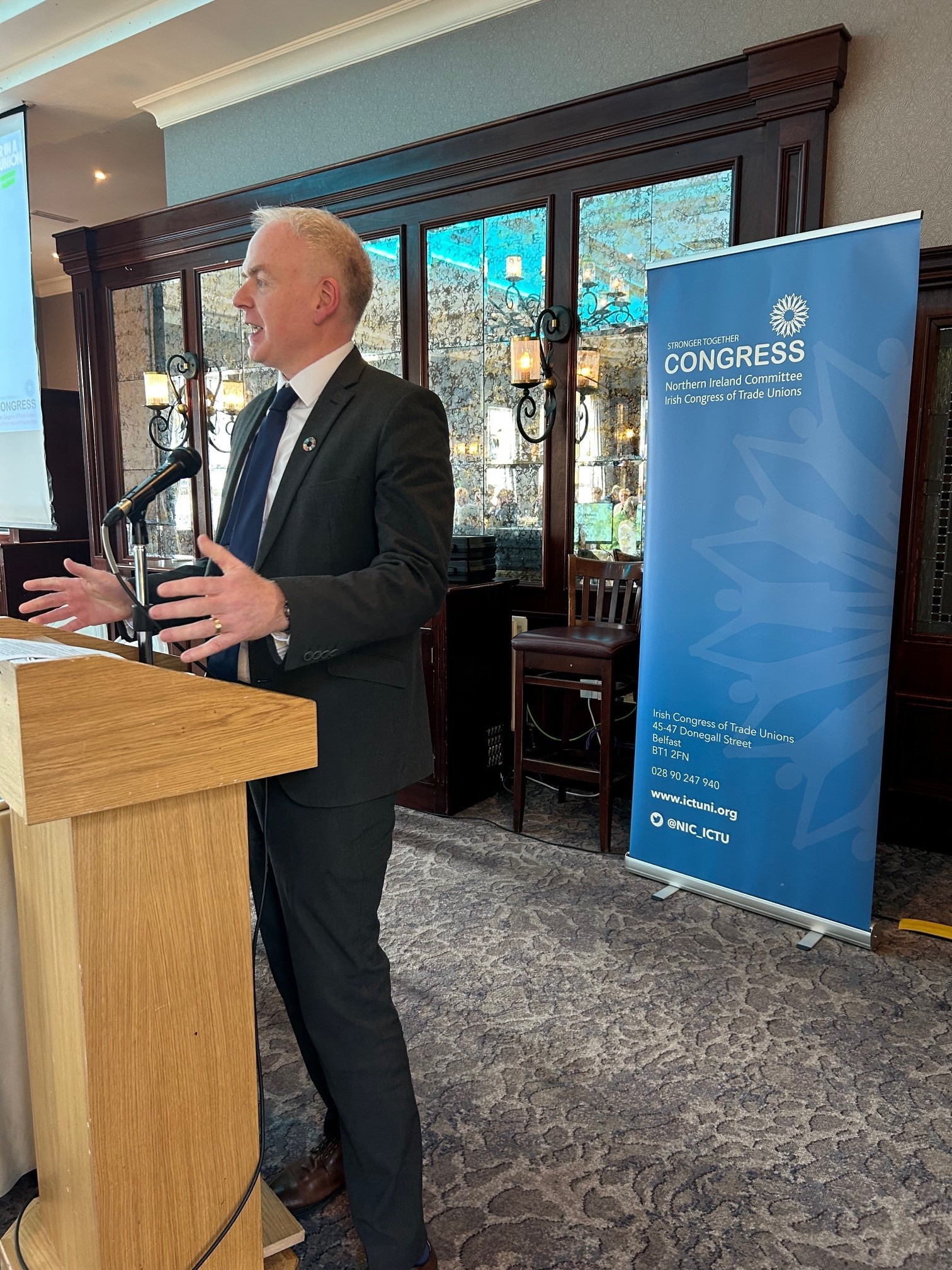
The Seminar explored how the two RWCs can work more effectively together, as was the case before covid. The ICTU President Justin McCamphill also contributed, focusing on ICTU’s broader agenda for collective bargaining, workers’ rights and challenging misogyny and the far-right.
The seminar dinner had as guest of honour Eddie Lynch, who recently ended his two terms as NI Commissioners for Older People, following his work with the Age Sector Platform, which organized local and regional Pensioners Parliaments. Eddie has recently been appointed as CEO of the Law Centre NI.
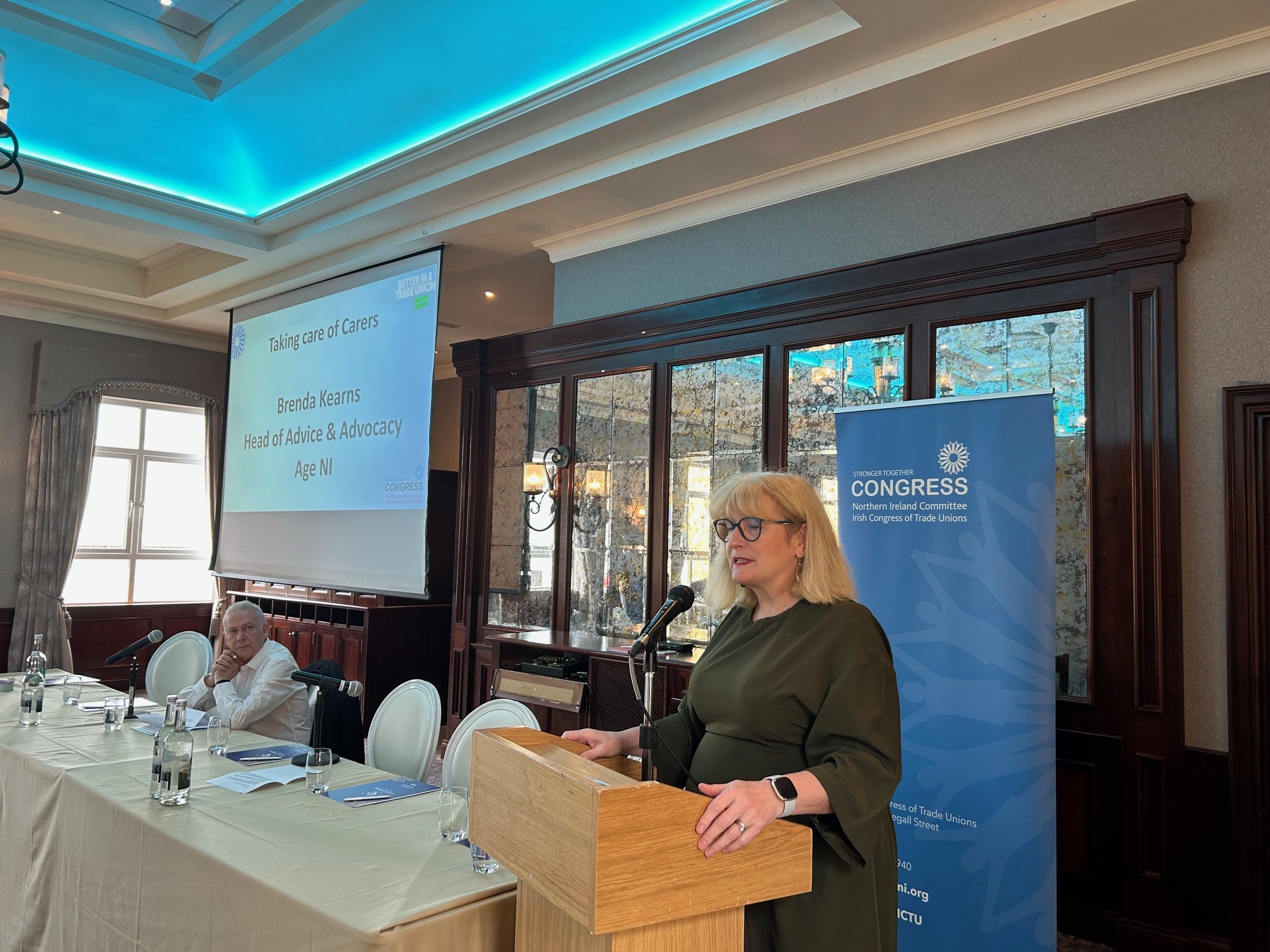
Day two opened with a detailed session from Age NI’s Head of Advice & Advocacy Brenda Kearns on Rights of carers and support available, and on preparing for any eventuality, including the necessity of a clear and legal will, and there was a discussion on the support available from trade unions to members.
David Carroll informed the Seminar on his work as ICTU’s Anti-Racist Workplaces Project Coordinator and offered to branches and retired members sections his services running workshops and bespoke education on effectively challenging racism.
The Seminar was closed by a veteran of several ICTU Age Seminars, the former National Officer for the NPC, Neil Duncan-Jordan, who joined online from his constituency office in Poole, Dorset, where he was elected as a Labour MP last July (and has challenged his own government on both the Winter Fuel means-testing and recent welfare cuts.
Seminar attendees from both jurisdictions were notably well engaged.