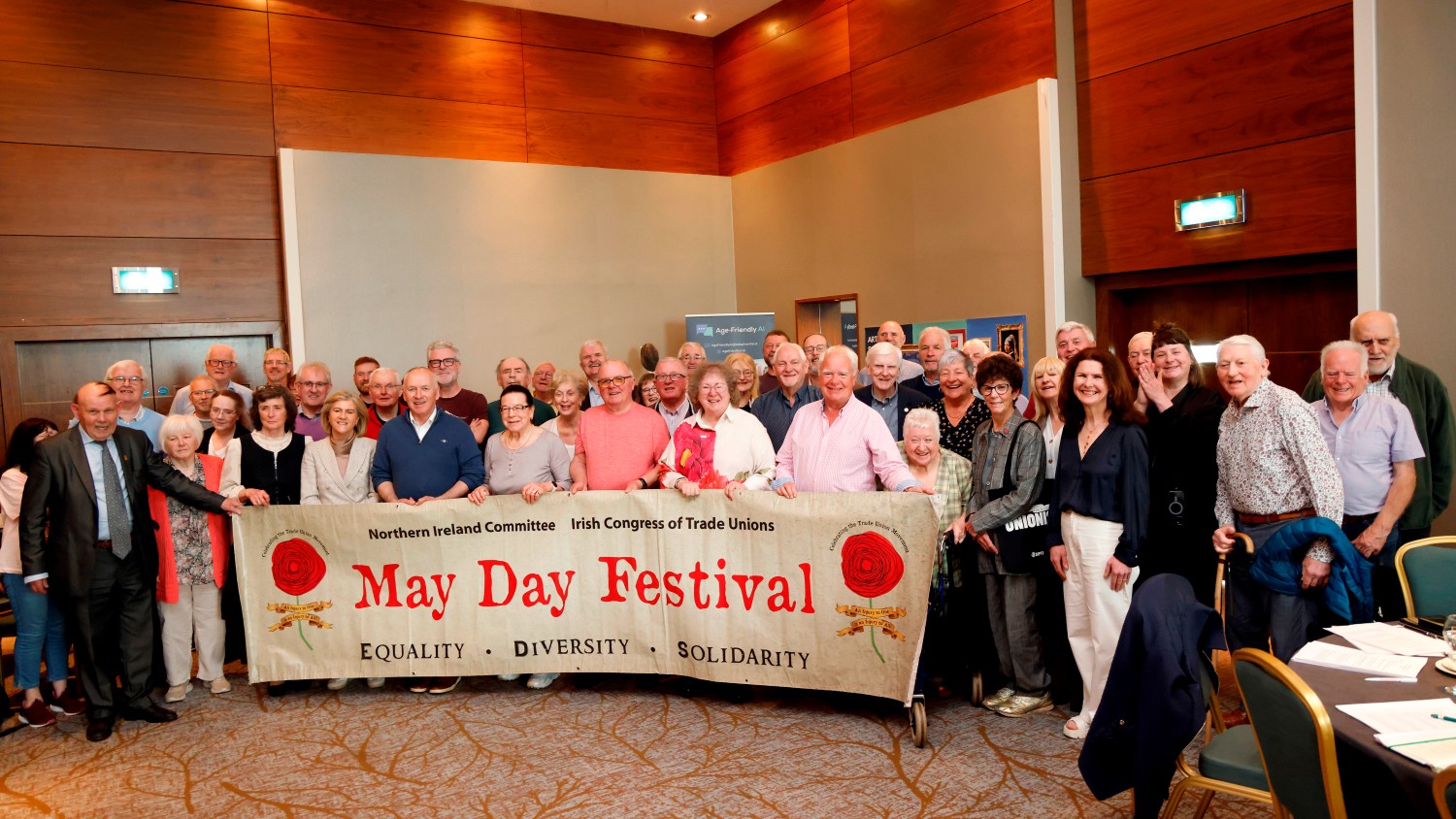
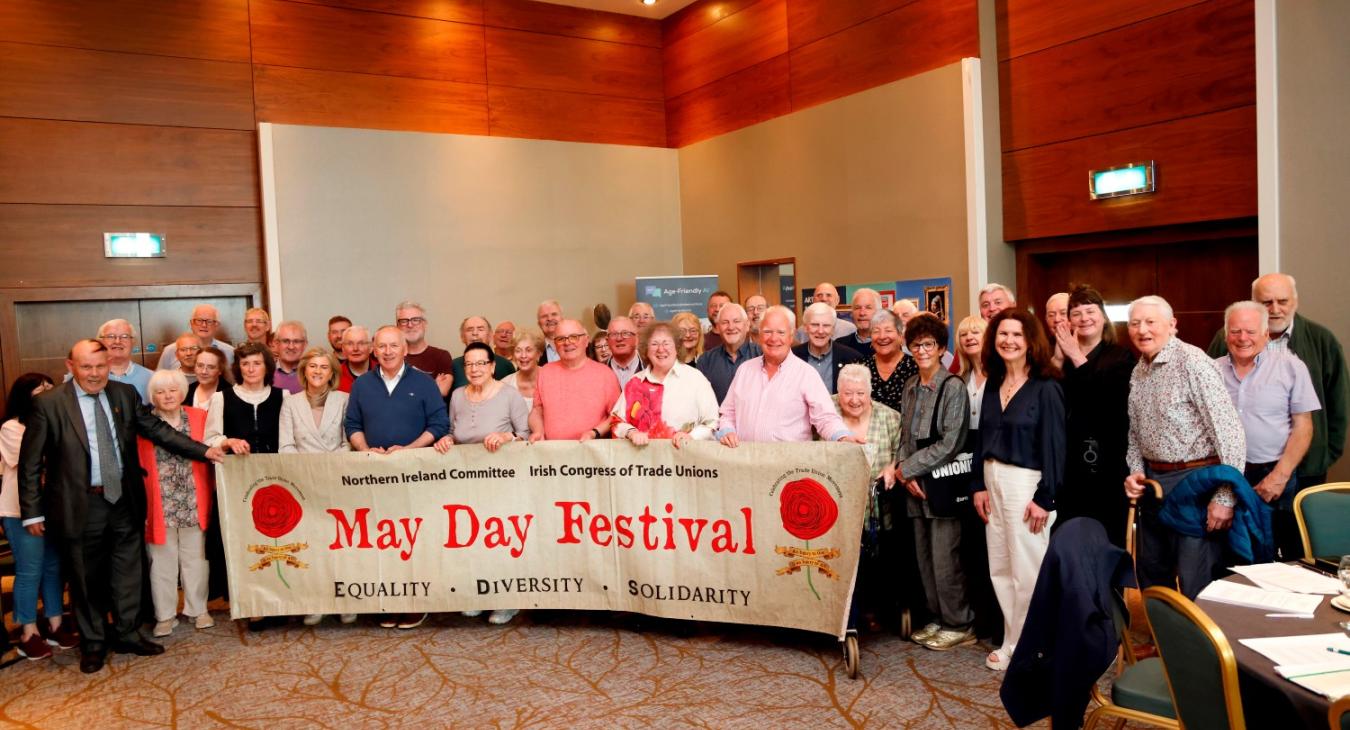
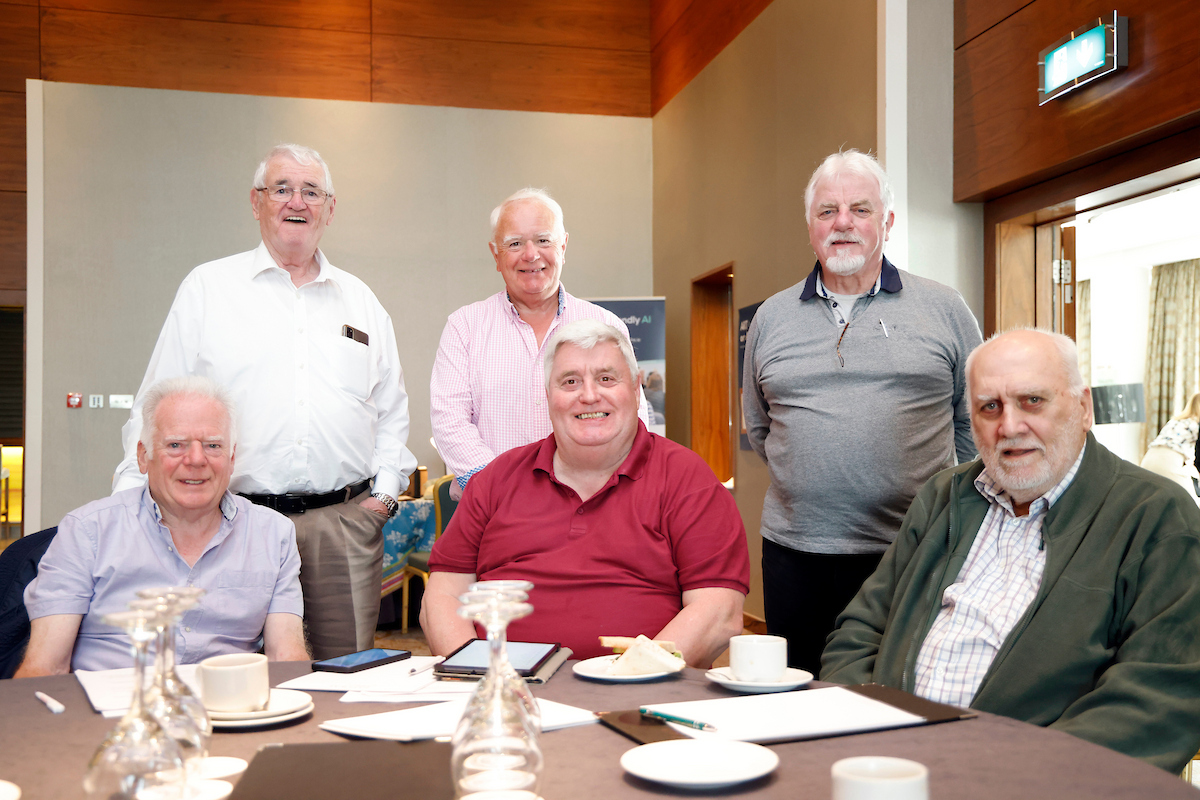
The NIC-ICTU’s Retired Workers’ Committee (RWC) annual Age Seminar was held in in joint session with the RoI RWC in the Gateway Hotel in Dundalk.
The tenth such event was chaired by Ann Walsh, ROI RWC committee secretary and Margaret Galloway, NI RWC committee chair. Proceedings were started by Jacquie White, Congress Vice President & UTU general secretary, who told delegates from unions across the island that
you embody those who have paved the way for me and others with whom I work to achieve the rights and advancements across many sectors of work which we can enjoy and on which we can build today. On behalf of those currently active in ICTU I thank you for that.
It is particularly apt that this event is taking place as we approach the May Day events and celebrations,” said Jacquie, and a commemorative May Day photo of all delegates was organised, using the Congress banner used for Belfast’s May Day parade. Like the theme of 2026’s May Day in NI, the NIC chair highlighted the importance of the Good Jobs Bill. “We have one year to get this legislation over the line and it is imperative for all of us to stand together for those workers who are giving to this society for little gain. We have a chance now for change – we must seize it.
I would also like to reference briefly the campaigning being carried out by ICTU for those who have left work. As highlighted in the 2021 BDC motion, it is a disgrace that Northern Ireland is the last jurisdiction in these islands where age discrimination in relation to goods, facilities and services has not been outlawed. Many of you will recall that similar motions have appeared on the Agendas for the Northern Ireland Biennial Delegate Conferences in 2016 and 2021. Three more similar motions were passed at the Northern BDC last autumn in Enniskillen.
The theme of age discrimination was addressed as part of a wide-ranging contribution from the NI Commissioner for Older People, Siobhan Casey. Her recently published Corporate Plan, 'to make Northern Ireland a great place to age', includes advocating for change through better services – such as transport, housing, health and social care. Change through empowering older people, extending and protecting their rights and challenging social attitudes which devalues our older citizens. Congress supports these ideas and policies and does so on both sides of the border.
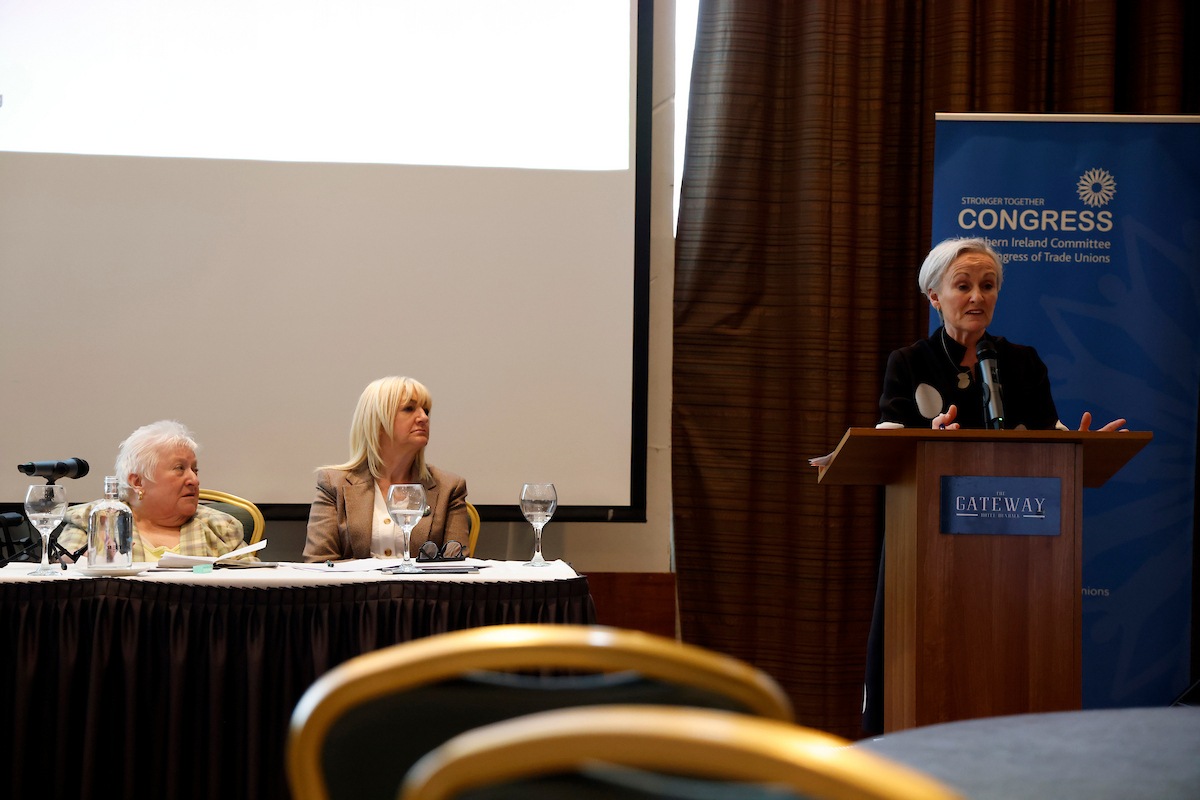
Other speakers included Sally-Ann McLaughlin, Community Dietician, Health Promotion & Improvement Department, Dublin North East who advised delegates on healthy eating and health improvement tips for older adults.
This was followed by Paula Turner and Dr Emma Clark, of the Age-friendly AI Project, who ran an interactive workshop on their Introduction to AI module, which has been co-created with and for older adults. This session included demos and showcased various aspects of AI useful for daily life and what to look out for when using technology.
The conference dinner was enlivened by a talk from Norman A. Croke, Kildare Trades Council secretary and former Head of SIPTU College. Norman shared some insights from his recently published article in the European Journal of Food, Drink and Society which traces the history of trade unionism and collective bargaining in the hospitality sector from 1918 to the present day.
The strategy of the Hotels, Restaurants, and Catering Branch (no. 4) was from the outset to create a stable workforce and sustain a stable membership. The challenges were characteristics of the hospitality sector anywhere, such as Isolation from mainstream workers, a culture of individualism, with an emphasis on tipping as a form of remuneration, as well as irregular work patterns, high level of turnover, young, unskilled, often female immigrants.
Norman outlined the stages of unionisation in the sector, and its decline in recent years, such as the 1925 Strike and the Industry Agreement of 1929, establishment of an Employment Bureau (Run by section committees), the top-down organisation by hotel, department and industry. (Heads of Departments and sections, Chefs, Waiters, Porters, Accommodation, etc), the introduction of service charges as a substitute for tips and gratuities, Professional Training and certification for all sectors and grades within the industry, and national recognition of professional competencies. This stimulating talk ended a full and informative day’s discussion.
The second day opened with reports on the work of the Retired Worker Committees, trade union and other political activities by retired workers across the movement.
Kealan McMoreland, Head of the Office of Emergency Planning Kaelan gave a timely talk in the light of our recent experience of dangerous weather conditions exasperated by climate change. Kealn outlined some practical steps people’s household and community can take to prepare for extreme weather emergencies and the loss of essential services such as gas and electricity.
Finally, Dr Tom McDonnell, Co-director of NERI Tom presented on the NERI/ ICTU all-island New Economic Model, and what it means for older people. Specifically, Tom highlighted that for older workers, the model’s Triple bottom line perspective emphasises inclusive growth, and so adequacy of income for non market participants, through, for instance, a focus on ensuring adequacy of welfare payments, heavily subsidised universal public services and economic resilience safeguards to protect living standards for everyone.
The 2027 Age Seminar will cross the border again, and be hosted in Newry.